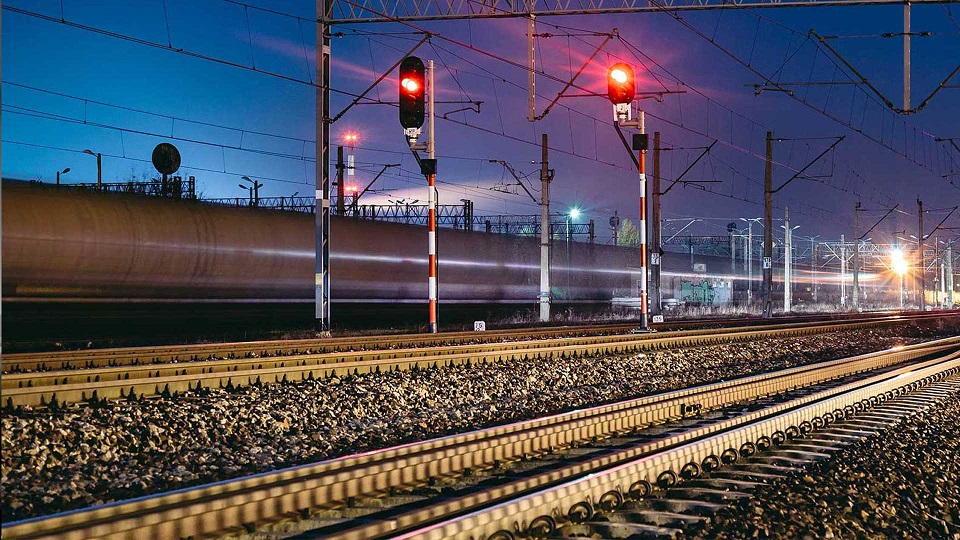
Signalling and telecommunication Services
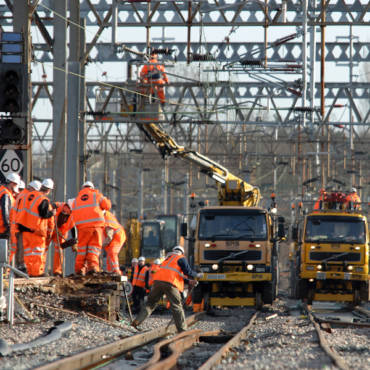
Signal and Telecommunication Department is responsible for installation and maintenance of Signalling system essential for the safe & speedy movement of trains and Telecommunication systems required for the effective utilization of the large fleet of locomotives and other rolling stock and track as well as for the administration of the vast Railway Network. Telecommunication is a vital infrastructure for managing any transportation network.
Signal and Telecommunication Department is responsible for installation and
maintenance of Signalling system essential for the safe & speedy movement of trains and Telecommunication systems required for the effective utilization of the large fleet of locomotives and other rolling stock and track as well as for the administration of the vast Railway Network. Telecommunication is a vital infrastructure for managing any transportation network. Indian Railway has an in-house Railway Telecommunication Network for managing Train operations and staff management and to offer Passenger Amenities. In terms of thsophistication in Signalling and Telecommunication installations,Southern Railway occupies the pride of place among the various Indian Railway systems.
SIGNALLING
Multiple Aspect Colour Light Signalling (MACL)
Mechanical signals of Semaphore type are progressively replaced by Electrical
signalling with Multiple Aspect Colour Signals (MACL). MACL signals have better visibility, quick operation and less maintenance.
Route Relay Interlocking (RRI) and Central Control Panels in signal control system
By mere operations of knobs and route buttons, routes are set automatically and
signals are cleared with absolute safety. The entire station is track circuited. Points and signals are operated by individual knobs/slides in small yards.
Panel Interlocking system
Unlike Route relay interlocking, in panel interlocking points and signals are operated individually. This is being adopted in smaller wayside stations.
Solid State Interlocking
As a technological development, the solid state with electronics system having software programming, solid-state interlocking signalling control system is being now inducted to achieve economy and flexibility. This sophisticated microprocessor based interlocking system works through Microprocessor devices and software programming. In this system there is less number of relays, and alterations/additions in the yard is possible without much extra wiring. This system adopts the usage of latest CENLEC standard of software validation.
Automatic Block Signalling with Continuous Track Circuiting
Automatic Block signalling systems are mostly used when the train traffic become more congested and busy, especially in suburban area and to increase line capacity. This eliminates block working and trains are signalled automatically without much dependence on human element. This ensures train safety, speed and also detects any rail discontinuity.
Token less Block working
In the absolute block system in single line, Token Block instruments are used. The token will be handed over to the driver of train after granting line clear to enter in the Block section. The process of handing over of token at every station is time consuming and laborious resulting in token missing. The system of token less block working helps to increase line capacity on single line sections.
Audio Frequency Track Circuits (AFTC)
Southern Railway has the distinction of introducing Audio Frequency Track Circuit for the first time in the Indian Railway system in 1994-95. As the conventional DC track circuits are found vulnerable to the interference of
currents generated by the thyristor/Chopper controlled locomotives, joint less Audio Frequency track circuits have been found to be the solution in such sections. The AFTC does not require insulated joints and can work for longer lengths and is suitable for AC and DC electrified areas. These track circuits are more reliable because failures due to block joint shorting are avoided, due to non-availability of joint and the train running is very smooth.
LED signals for colour light signalling (LED)
In the colour light signals light aspects of mechanical signals are lit by incandescent bulbs. These bulbs have limited hours of working and get fused due to ageing and voltage fluctuations. The bulbs have to be replaced frequently. As an improvement, LED lit signals are now introduced. LED signals are having longer life and better visibility. This type of signal has enhanced the reliability by reducing the incidences of signal lamp fusing. It also affords good visibility to the drivers and more signals are likely to be converted to LED signals.
TELECOMMUNICATION
Train Control Communication:
Movement of each and every train is monitored by a controller at the nearest divisional Hqrs. Facility is also provided to the driver or guard to communicate with divisional Hqrs through portable telephone which can be easily connected to the overhead line wires which are running parallel to the track or connected to the Emergency Telephone sockets provided at every KM in the section where controls are working through under ground cables. An emergency portable telephone is kept in the Guard’s compartment of each and every train.
Block Circuits
Running of trains in each section (between any two stations) is controlled by block
circuits through which running of only one train in a section at one time is Electrically
ensured in addition to oral confirmation. Overhead lines of Railway or BSNL and
underground cables are used for this purpose.
Optical Fibre Cable network
Optical Fibre Cable is laid along the track to provide a reliable and noise free
communication. OFC network is widely used for Railway Control Communication taking
advantage of its all long haul high bandwidth circuit interconnecting Railway Telephone
Exchange. Passenger Reservation System, Unreserved Ticketing System, Network Freight
Operating Management system have been transferred through railway OFC.
In Southern Railway distribution of various media for Telecommunication is as follows
1. OFC and RE quad cable in Electrified sections
2. OFC and 4/6 quad cable
3. Only OFC.
4. Railway owned overhead line.
5. Rented overhead line/ channels/ bandwidth from BSNL
Railway Telephone Network
There is an in-house Railway Telephone Network connecting all-important offices,
officials, Way stations, Divisional Headquarters & Zonal Head Quarters. Railway
telephones exchanges are inter-connected through Railway OFC network, Railway
Microwave network and are supported by rented BSNL channels as stand by
Railway Microwave Communication Network
In Southern Railway telecom network is supported by Railway Owned MW network
using state of the art technology (Digital Microwave System). MW network is spread over Chennai- Jolarpettai, Erode – Palghat, Chennai – Tiruchchirappalli, Madurai – Palghat covering all divisional headquarters, mostly along the tracks.
Wireless communication System
Driver, Guard, Supervisors & officers of permanent way, Mechanical, Electrical and Signal & Telecom departments are provided with 5 watts hand held walkie-talkies, which can be used to establish communication between moving train & adjacent stations. Every railway station is provided with 25 watts VHF set for this purpose.
Data network
There is an exclusive PRS network connecting Chennai and all the PRS centers of
Southern Railway and other Metros. The centers are connected either through Railway OFC network or hired channels from BSNL. Similarly there is a Freight Operating Management System network for monitoring the movement of freight transport. Coach Operation Information System is a network for coach management and this is under implementation.
Passenger Amenities
Safety, security and comfortable journey of the passengers are the aims of Railways in train operation. To meet this objective, the following facilities have been provided in almost all-important stations.
Continuous announcement through public address system
Electronic display board
IVRS system for giving on line information about availability of
Accommodation, arrival & departure of trains.
Call centers and integrated IVRS for giving all types of passenger
Information.