HYDRO ELECTRIC
Hydroelectricity is electricity produced from hydropower. In 2015, hydropower generated 16.6% of the world’s total electricity and 70% of all renewable electricity, and was expected to increase about 3.1% each year for the next 25 years.
Hydropower is produced in 150 countries, with the Asia-Pacific region generating 33 percent of global hydropower in 2013. China is the largest hydroelectricity producer, with 920 TWh of production in 2013, representing 16.9 percent of domestic electricity use.
The cost of hydroelectricity is relatively low, making it a competitive source of renewable electricity. The hydro station consumes no water, unlike coal or gas plants. The average cost of electricity from a hydro station larger than 10 megawatts is 3 to 5 U.S. cents per kilowatt hour.With a dam and reservoir it is also a flexible source of electricity since the amount produced by the station can be varied up or down very rapidly (as little as a few seconds) to adapt to changing energy demands. Once a hydroelectric complex is constructed, the project produces no direct waste, and in many cases, has a considerably lower output level of greenhouse gases than fossil fuel powered energy plants.
Types of Hydropower Plants
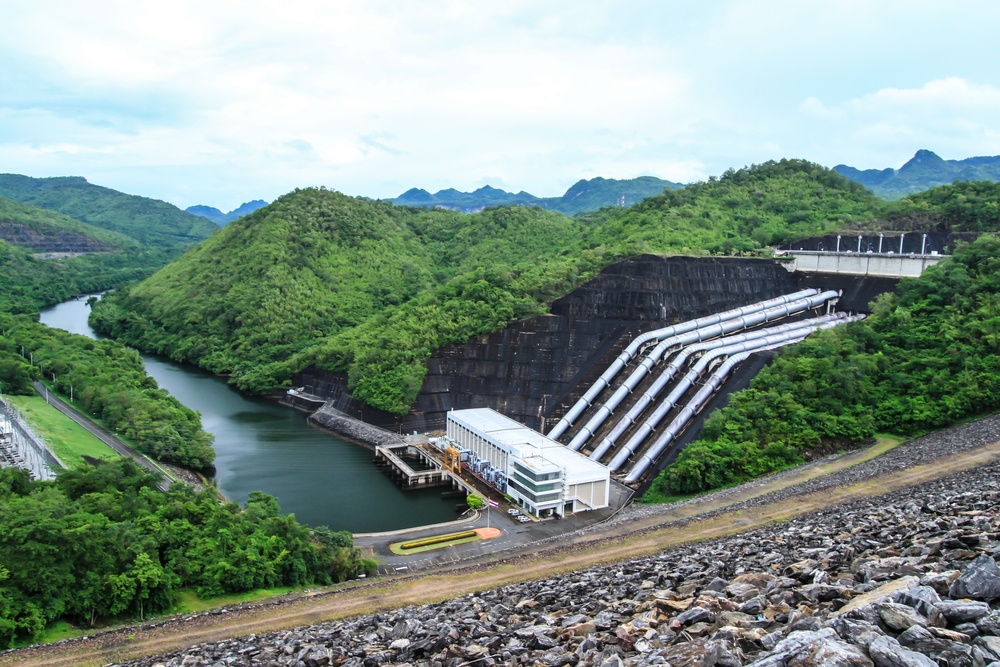
The most common type of hydroelectric power plant is an impoundment facility. An impoundment facility, typically a large hydropower system, uses a dam to store river water in a reservoir. Water released from the reservoir flows through a turbine, spinning it, which in turn activates a generator to produce electricity. The water may be released either to meet changing electricity needs or to maintain a constant reservoir level.
A diversion, sometimes called run-of-river, facility channels a portion of a river through a canal or penstock. It may not require the use of a dam.
nother type of hydropower called pumped storage works like a battery, storing the electricity generated by other power sources like solar, wind, and nuclear for later use. It stores energy by pumping water uphill to a reservoir at higher elevation from a second reservoir at a lower elevation. When the demand for electricity is low, a pumped storage facility stores energy by pumping water from a lower reservoir to an upper reservoir. During periods of high electrical demand, the water is released back to the lower reservoir and turns a turbine, generating electricity.
Facilities range in size from large power plants that supply many consumers with electricity to small and micro plants that individuals operate for their own energy needs or to sell power to utilities.
Large Hydropower
Although definitions vary, DOE defines large hydropower as facilities that have a capacity of more than 30 megawatts (MW).
Small Hydropower
Although definitions vary, DOE defines small hydropower as projects that generate 10 MW or less of power.
Micro Hydropo
werA micro hydropower plant has a capacity of up to 100 kilowatts. A small or micro-hydroelectric power system can produce enough electricity for a home, farm, ranch, or village.